
Winslow Township Previous Residents by Era
Past residents are best traced with a time-specific source chain. Modern parcel and recorded-document tools can establish the lot and transfer history. Older deeds shift to archives and historical repositories. Census, telephone, obituary, cemetery, and probate material can add a household layer, but none is a complete list of every person at an address. The table separates the documented channels and keeps the collection gaps visible.
| Source | Verified years | Where held | What it can show |
|---|---|---|---|
| County Clerk online official-record index | Jan. 1, 1978–present | Camden County Clerk SearchNG | Recorded documents through party, legal, date, and document fields. |
| Camden deed books and indexes | Deeds 1844–1900; indexes 1844–1912 | New Jersey State Archives and historical Clerk route | Earlier recorded chain after Camden County formed. |
| Gloucester deed records | Before 1844 | Gloucester County, CCHS, and documented FamilySearch route | Predecessor geography for land later within Winslow Township. |
| Camden-focused directories | 1839 or 1863–1947, depending on repository | CCHS and Camden County Library | Regional lead only; no annual Winslow Township run verified. |
| Camden telephone directories | 1960–present | Camden County Library | Listed-contact clue; older volumes are stored. |
| Federal and State census material | Federal runs and State census intervals vary by collection | Library, CCHS, and State Archives | Dated household and place evidence, not continuous street evidence. |
| Local construction records | No online range verified | Winslow Construction Office or OPRA | Project and inspection chronology for a known address. |
Start with the newest reliable parcel identification, then move backward one record at a time. If the question reaches an era without online coverage, change custodians instead of treating a no-result screen as proof that no record exists.
Start Winslow Township Previous Residents with a Parcel
Use the Camden County Property Assessment Data Search Hub or the county myiDV map to confirm the current property location before researching previous residents. Select Winslow Township, then search by property, owner, street, block and lot, or PIN as the tool allows. A selected parcel can supply the municipal code, block, lot, qualifier, PIN, and property location that connect a modern street address to a deed’s legal search. The tax mailing address is an administrative contact and can differ from the parcel location, so it is not proof that a person lived there.
The Winslow Tax Map Viewer adds a second local route with Block & Lot, Historic Block & Lot, Address, and Map Sheet Number choices. Its historic block-and-lot option can help reconcile an older legal description before a researcher assumes the parcel vanished or the street changed. The research did not inspect exact historic-result fields, so use the tool as a locator and confirm the match in county GIS and the deed record.
The Tax Map Viewer displays the local historic-locator options used in a prior-residents search.
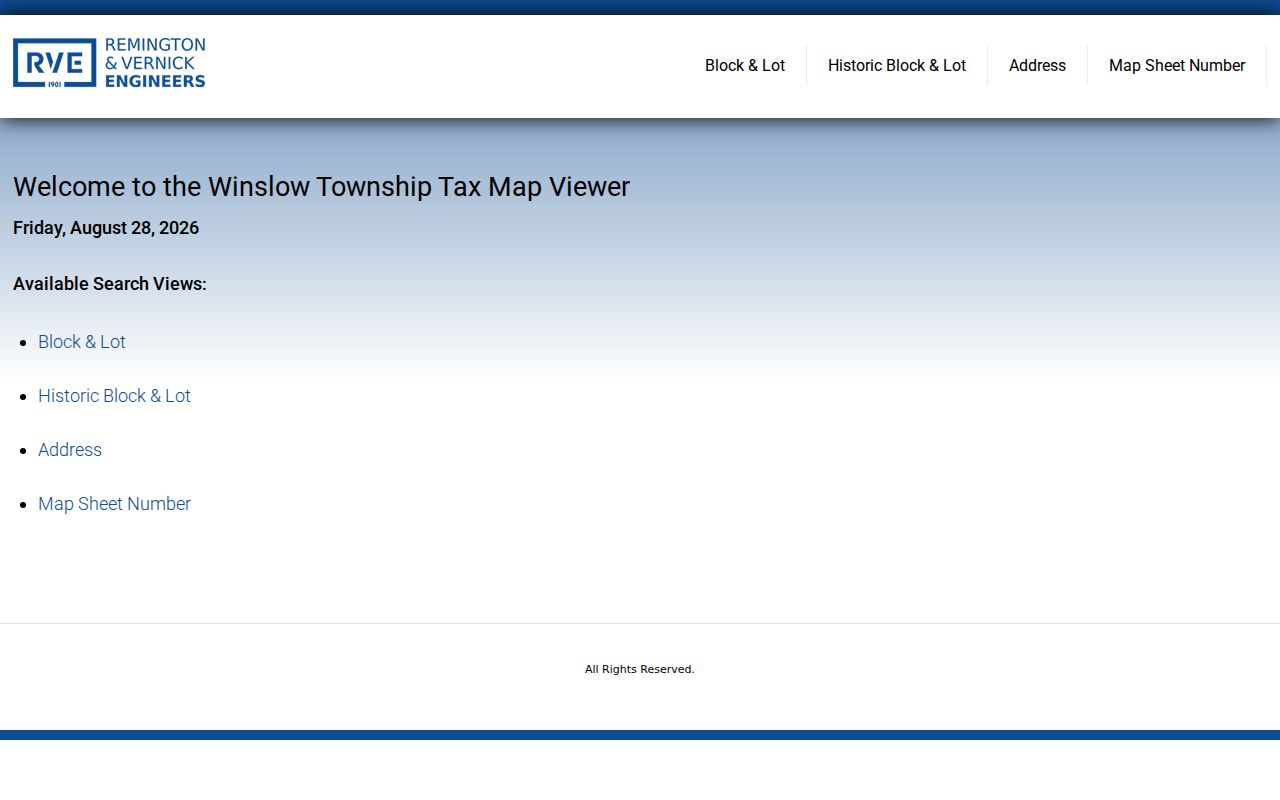
A block-and-lot note keeps each later deed search tied to the same land, even when a community name or address format varies.
Winslow’s Assessor is the written-request fallback for a property card when a public display is incomplete. The Township says requests should include block and lot, and changes to a name or address must be made in writing through the Assessor. Construction and zoning records are separate channels. A known address, parcel locator, and date range allow the Construction Office or the Municipal Clerk’s OPRA process to search for an existing permit or inspection record without asking for a broad resident report.
Note: A parcel identifies land and a recorded owner connection, not every past resident or household member associated with the address.
Winslow Township Previous Residents After 1978
The Camden County Clerk Property Records Online index begins on January 1, 1978. That is an online-access boundary, not the beginning of land records in Camden County. For a later address, use the current parcel’s block and lot with the acquisition deed. The instrument can supply party names, recording date, document type, consideration, book and page, Clerk’s file number, and related-document links. Those details make it possible to distinguish a transfer from a mortgage, release, or assignment.
The Clerk’s Property Records Online landing page states the coverage boundary before a prior-residents search begins.
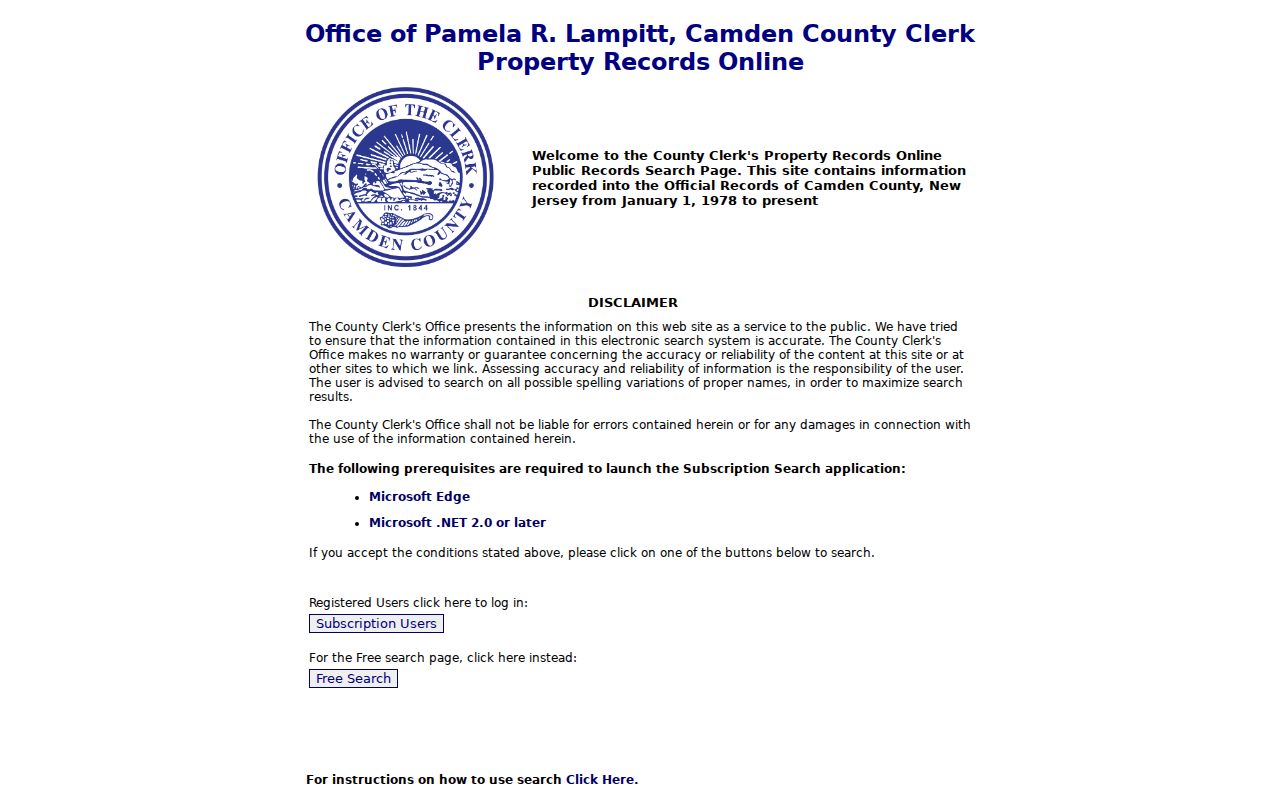
A result should be read as a document-party lead and checked against the same legal parcel before it is added to the ownership sequence.
The Clerk advises users to try all plausible spellings of a proper name. That advice matters where a prior owner has a common surname, a middle initial, a space or hyphen variation, or a changed surname. Date ranges, document type, legal criteria, a second party, and linked documents are the ways to narrow a result. An online hit can start a past-residents trail, but it does not establish occupancy on its own.
Trace Previous Residents Through Camden Deeds
Move backward through a transfer chain by using the current owner and parcel to locate the acquisition deed, then identifying the seller. Search that seller as a prior buyer in an earlier recorded document and recheck the same block, lot, and legal description at every handoff. The official Clerk SearchNG help documents Party Name, second-party name, More Names, ALL/ANY choices, document type, date range, book and page, Clerk’s file number, consideration, legal Town, Lot and Block, map number, and linked-document functions.
The Clerk’s help screen identifies the fields available for a targeted backward deed search.
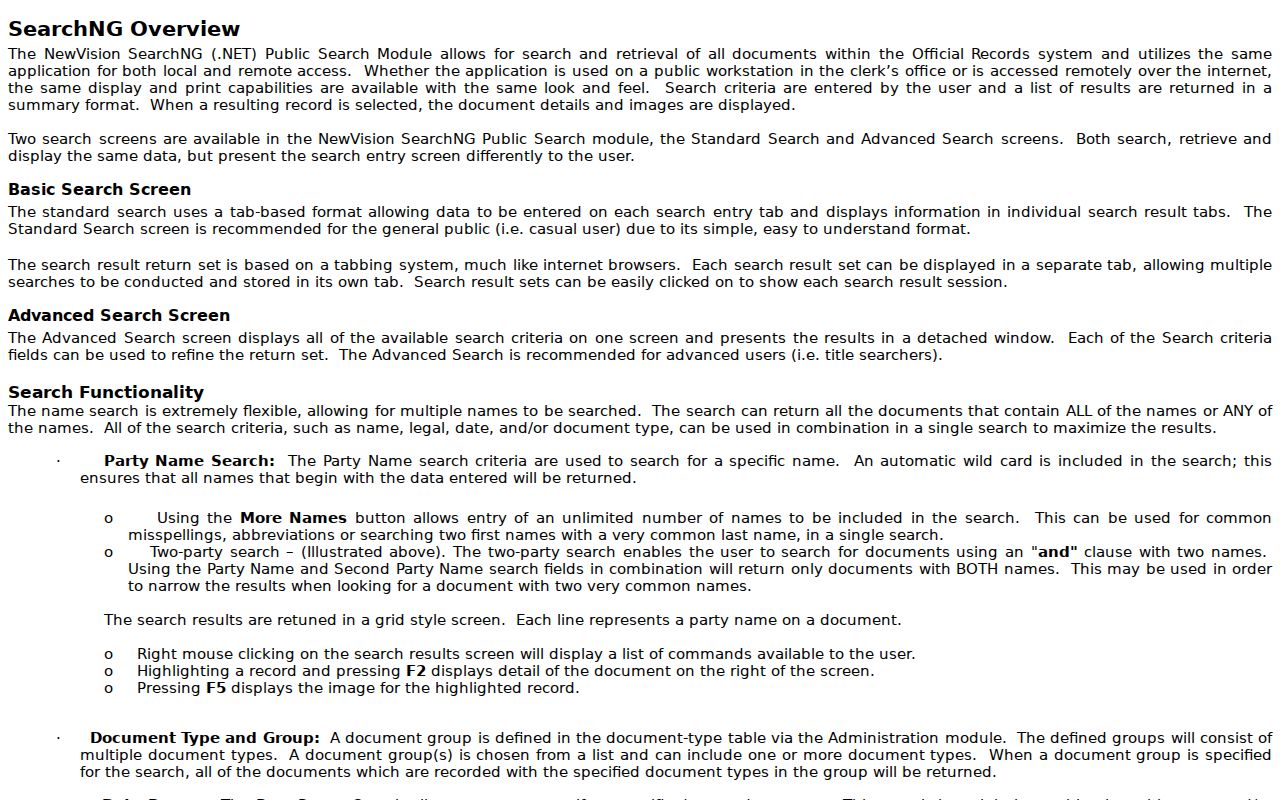
Those filters make it possible to test whether an earlier party and parcel belong to the same transfer chain rather than to a similar name elsewhere in the county.
- Confirm the present parcel in assessment or GIS and write down the Town, block, lot, qualifier, PIN, and property location.
- Find the acquisition deed using legal criteria or the known current owner, then note the seller, recording date, and document identifier.
- Search the seller as a buyer in an earlier instrument, adding a date range, second party, or document type to reduce collisions.
- Compare the legal description at each transition and use linked documents only as supporting context.
- At the 1978 online cutoff, shift to the Clerk’s historical route, the State Archives, CCHS, or predecessor-county channels.
- Grantor
- The party transferring an interest in a recorded instrument. The actual document identifies the role.
- Grantee
- The party receiving an interest in that instrument. A grantee search can locate an earlier acquisition.
- Chain of title
- A sequence of recorded transfers connected by the same legal parcel, not merely by matching names.
- Legal description
- The lot, block, map, or other parcel wording that ties a deed to land more reliably than an old street label.
Winslow Township Previous Residents Before Camden
Records geography changes the earlier search. Camden County separated from Gloucester County in 1844, and Winslow Township was created in 1845 from part of Gloucester Township. CCHS says Camden deeds begin in 1844 and earlier deeds belong in Gloucester County. For a pre-1844 land question, use Gloucester County and locality terms first. For the later nineteenth century, shift to Camden County and Winslow Township terms. This is a jurisdiction change, not evidence that a street was renumbered.
The New Jersey State Archives genealogy collections offer the archival bridge. The Archives lists Camden Clerk deeds for 1844–1900 and deed indexes for 1844–1912. It also describes Camden Surrogate dockets for 1844–1929 and historical census channels. CCHS identifies digitized Camden deeds for 1844–1901 through its documented FamilySearch route. Use the series and date band that match the record, rather than claiming a general online grantor-grantee index for the earlier era.
The State Archives genealogy page shows the historical collections and access routes that take over before the county’s online cutoff.
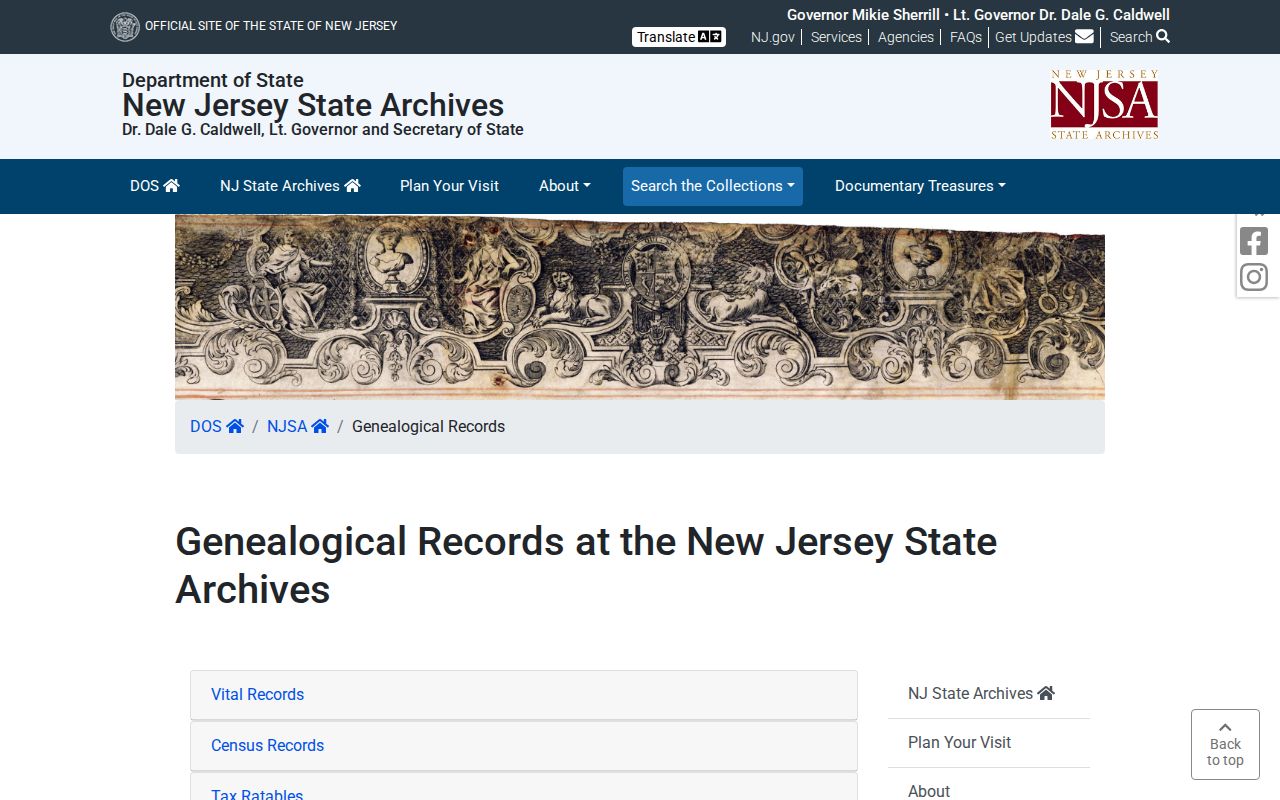
The Archives route preserves the difference between Camden-era land records and older Gloucester-era filings, which is essential to a defensible address history.
Comparison matters here: the Clerk’s online index starts in 1978, while State Archives and CCHS channels reach into the 1844 county-formation era. A missing online document should therefore trigger an archival or counter search, not a conclusion that the property lacked an earlier owner.
Winslow Township Previous Residents in Collections
The Camden County Library genealogy resources give a household clue after a deed trail reaches the right date range. The Library has Camden County city-directory microfilm for 1863–1947, selected nearby print directories, telephone directories from 1960 to present, federal census microfilm, and Courier-Post microfilm from October 1949 onward. The older telephone issues are stored, and the Library asks for advance notice. None of those descriptions verifies a Winslow Township criss-cross or annual household directory, so use a listing only for the place and period it actually covers.
The Library genealogy page presents the county’s directory, telephone, census, and newspaper research channels.
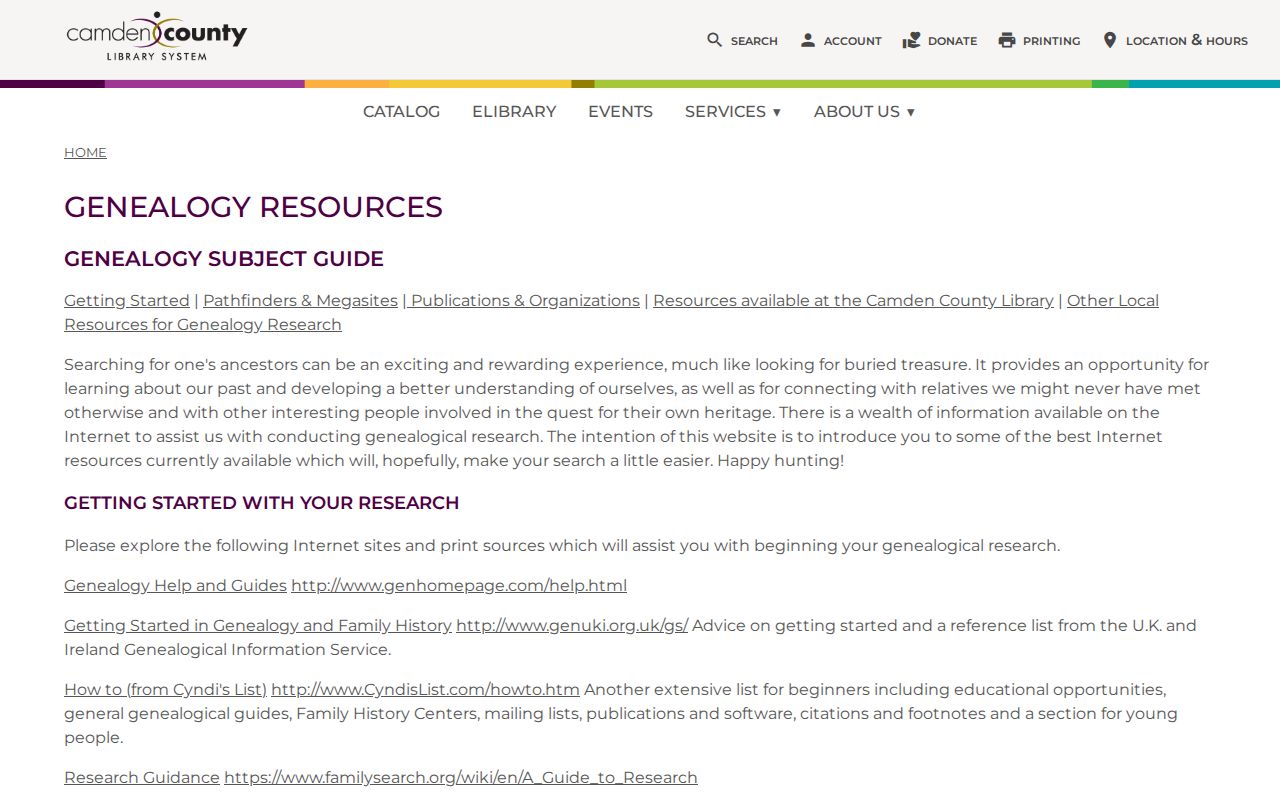
A library result is strongest when the person, hamlet, and date can be compared with a census interval or recorded land evidence.
The Camden County Historical Society research library adds census, cemetery, obituary, WPA death-index, family-file, newspaper, yearbook, and regional directory material. CCHS describes Camden directories for most years from 1839 through 1947 and telephone books for most years from 1921 through 1998, while warning through its holdings descriptions that those are Camden-centered resources. It offers appointment research and remote requests for a known person, date range, location or hamlet.
The CCHS research page is the source for its physical holdings and remote-research path.
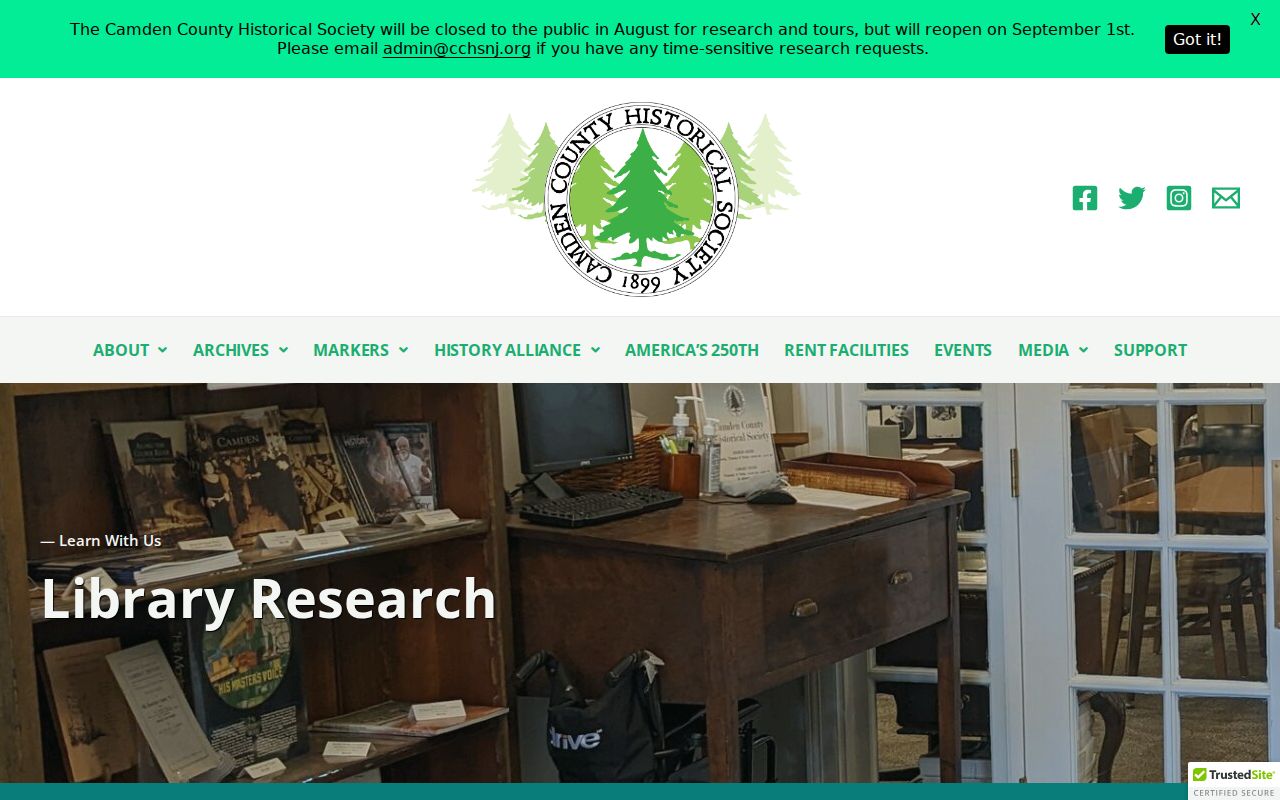
CCHS can help close a family-history question, but a Camden directory result never proves that a rural Winslow Township household appeared in that volume.
For a fuller discussion of the collection limits and how to inspect a directory page, see the Winslow Township city directory collections.
Pair Winslow Township Past Residents with Census
Ownership is only one strand of an address history. A federal or State census can provide a dated household and locality view when the collection covers the period. Camden County federal census microfilm at the Library spans 1850–1930, while CCHS reports federal census access from 1830–1950. New Jersey State censuses were taken in years ending in five from 1855 through 1915, although several early years are incomplete. CCHS identifies Camden materials for 1885, 1895, and 1905, and the State Archives identifies the Centre Township–Winslow Township volume for 1895.
A practical household flow is simple: verified parcel and deed date → corresponding census period → a directory or telephone clue if that collection names the place → obituary, cemetery, or estate evidence. Each record needs to agree on name, date, and community label. A county or postal-city match by itself is too broad in a Township with places such as Atco, Blue Anchor, Braddock, Sicklerville, and Waterford Works.
Obituaries and cemetery material can be a useful endpoint, especially where CCHS’s death, burial, and obituary resources identify a date or family context. The Camden Surrogate Court’s records database supports case type, first name, last name, and docket number. Its appointment, mail, and drop-box channels are the proper follow-up for a specific estate record. An estate result is a targeted lead, not proof of every family relationship.
Note: Preserve every source’s place name and date, because an old household trail may cross hamlet, Township, county, and census labels.
Close a Winslow Township Previous Residents Trail
Local permits can clarify building change rather than personal occupancy. Winslow Construction records cover projects such as new homes, additions, pools, roofing, siding, utilities, sheds, and decks. No public online address-index for those files was verified. For a known property, ask the Construction Office or the Township’s OPRA custodian for an existing permit or inspection record by address, block and lot, and date range. Planning or zoning material can add project context where the parcel is in the correct jurisdiction.
Use a narrow question at each stop: whether a deed transfers the same parcel, whether a census places a household in the correct time period, or whether a probate docket fits a known decedent. A person may own property without living there, a tax mailing address can point elsewhere, and a permit identifies a project or application. Keeping those meanings separate prevents a tidy-looking but unsupported house history.
Lawful use. Use Winslow Township previous-residents records for family history, house history, estate research, and personal curiosity. Respect protected addresses and do not use old records to track, harass, or harm a living person.